



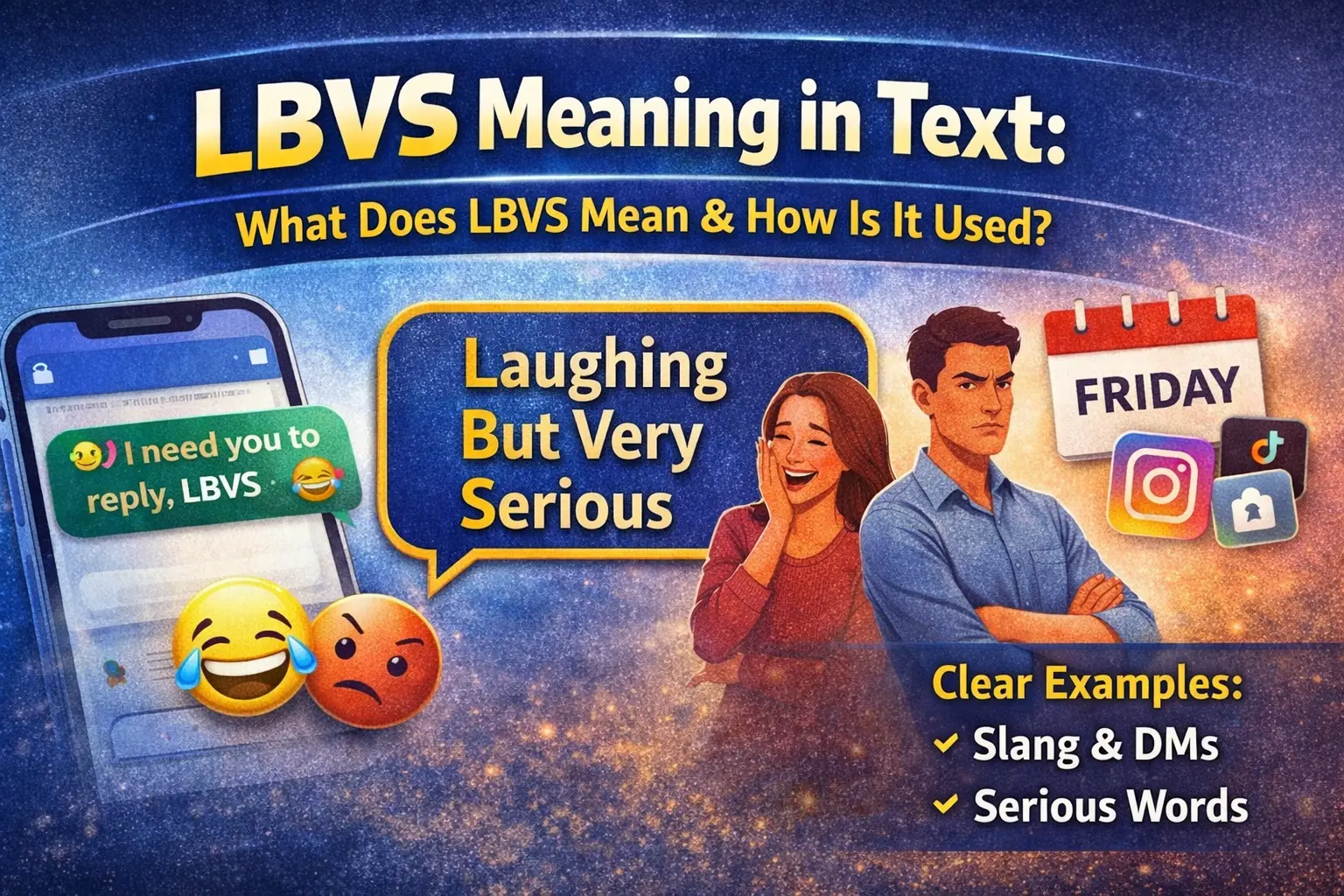
Seeing “LBVS” in a text or comment can be confusing. One moment the message feels funny, and the next it sounds serious. Without tone, emojis, or facial expressions, it’s hard to tell what the sender really means. Many people end up overthinking the message or misunderstanding the intent behind it.
This article removes that confusion. Here, you’ll learn the LBVS meaning in text, what it actually stands for, how people use it in real conversations, and when it’s meant to be taken seriously. By the end, you’ll know exactly what LBVS means, how to respond to it, and how to use it naturally without sounding awkward or unclear.
What Does LBVS Mean? (Simple Definition)
LBVS stands for “Laughing But Very Serious.”
It is used when someone is joking, smiling, or laughing, but still means what they are saying. The abbreviation helps balance humor and seriousness in a single message.
Example:
“I need you to reply faster, LBVS.”
In this case, the sender may be laughing, but the message itself is still important.
LBVS Meaning in Text (Why People Use It)
The LBVS meaning in text is closely tied to tone control. Since text messages don’t include facial expressions or voice cues, misunderstandings are common. LBVS helps explain how something should be taken.
People use LBVS to:
- Soften serious points
- Avoid sounding rude or aggressive
- Show honesty without tension
- Add clarity to emotional messages
In short, LBVS acts like a tone label. It tells the reader: I’m smiling, but I’m not joking.
LBVS Meaning Slang Explained
The LBVS meaning slang comes from modern internet culture, where people often mix humor with honesty. Unlike traditional slang that is purely playful, LBVS sits in a gray area between joking and seriousness.
It is commonly used by:
- Gen Z and Millennials
- Heavy texters and online communicators
- People who want to keep conversations light but honest
LBVS is not about sarcasm. It’s about being real—without being harsh.
Background and Origin of LBVS
LBVS emerged naturally from texting culture. As conversations moved from in-person to digital spaces, people needed ways to explain tone quickly. Terms like LOL and JK already existed, but they focused on humor. LBVS filled a different gap.
People needed a phrase that could say:
- “I’m laughing, but this matters.”
- “I’m joking, but I’m also serious.”
- “Please don’t ignore this just because I’m smiling.”
Over time, LBVS became common in personal chats, group messages, and social media comments.
What LBVS Really Expresses (Tone Breakdown)
One reason LBVS is effective is that it clearly communicates two emotions at once.
The “Laughing” Side
- Keeps the conversation friendly
- Shows humor or light emotion
- Reduces tension
This part signals that the message is not hostile.
The “Very Serious” Side
- Confirms the message still matters
- Shows intent or boundaries
- Adds emotional honesty
Together, these two sides prevent misunderstandings that plain text often causes.
Also Read: TW Meaning in Text: What Does “TW” Mean & How Is It Used?
LBVS in Casual Friend Conversations
In everyday chats with friends, LBVS is used to bring up something important without making the conversation heavy.
Examples:
- “You always steal my food, LBVS.”
- “You’d better come on time today, LBVS.”
Here, the sender is smiling—but they still expect change or action.
LBVS in Arguments or Disagreements
LBVS can also appear during disagreements, especially when someone wants to stay calm.
Instead of sounding angry, LBVS helps keep things balanced:
- Honest but not aggressive
- Direct but not cold
However, it should be used carefully. In very serious arguments, LBVS can feel dismissive if the other person is emotionally upset.
LBVS in Group Chats
Group chats often include mixed personalities. LBVS helps prevent misunderstandings when messages are read by multiple people.
It works well when:
- Addressing the group casually
- Making a serious request
- Correcting behavior lightly
Because group chats lack personal tone, LBVS adds helpful emotional context.
LBVS Meaning Across Social Media Platforms
LBVS on Instagram, TikTok, and Twitter (X)
On social media, LBVS often appears in:
- Captions
- Replies
- Comments
It’s commonly paired with emojis like 😂 or 😭 to reinforce tone.
Example:
“Y’all need to stop tagging me in this, LBVS 😂”
LBVS in DMs and Private Messages
In private chats, LBVS usually carries a stronger meaning. It often reflects:
- Personal feelings
- Honest opinions
- Emotional boundaries
Because DMs are more intimate, LBVS can signal trust and openness.
Is LBVS Slang or an Emotional Marker?
LBVS is technically slang, but it works more like an emotional marker. It doesn’t replace words—it explains how words should be understood.
Unlike LOL (pure humor) or JK (not serious), LBVS means:
“I mean this—just not in a harsh way.”
That’s why LBVS is becoming more common in emotionally aware communication.
When and How to Use LBVS Properly
LBVS works best when:
- The message is honest but light
- You want to soften the seriousness
- You trust the person reading it
Avoid using LBVS when:
- Writing professional emails
- Talking to someone you don’t know well
- Discussing extremely serious topics
Context matters more than the abbreviation itself.
Common Mistakes People Make With LBVS
Many people misuse LBVS by:
- Using it in formal communication
- Assuming everyone understands it
- Overusing it in serious conversations
LBVS should support the message—not replace clear communication.
Is LBVS Rude or Disrespectful?
In most cases, LBVS is not rude. It is usually meant to reduce tension, not create it. However, it can feel insensitive if used when someone expects a serious tone.
The key is awareness. Always consider:
- The topic
- The relationship
- The emotional state of the reader
Also Read: NTY Meaning in Text: Definition, Usage, and Examples
How to Respond When Someone Uses LBVS
Your response depends on the situation.
Friendly reply:
“Haha, I hear you.”
Acknowledging seriousness:
“Got it, I understand.”
Clarifying reply:
“Are you serious or joking?”
LBVS gives you a chance to respond thoughtfully instead of guessing tone.
LBVS vs Similar Short Forms
| Short Form | Meaning | Tone |
| LBVS | Laughing But Very Serious | Mixed |
| LOL | Laughing Out Loud | Humor |
| JK | Just Kidding | Not serious |
| FR | For Real | Fully serious |
| SMH | Shaking My Head | Disapproval |
This comparison helps explain why LBVS stands out—it blends emotion instead of choosing one.
Why Context Matters With LBVS
LBVS only works when the context supports it. The same message can feel:
- Friendly in a chat
- Awkward in an email
- Confusing in public comments
Always consider where and how you’re using it.
Final Thoughts
The LBVS meaning goes beyond simple slang. It reflects how modern communication blends emotion, humor, and honesty. By understanding the LBVS meaning in text, you can avoid misunderstandings, read messages more accurately, and express yourself more clearly.
When used correctly, LBVS is a helpful tool. Just remember—tone matters, context matters, and clarity always comes first.
FAQs – People Also Ask
What does LBVS mean in text?
LBVS means “Laughing But Very Serious.” It shows that the sender is joking or smiling, but still means what they are saying.
What does LBVS mean in slang?
The LBVS slang meaning refers to expressing seriousness while keeping a light or humorous tone.
Is LBVS a serious term?
Yes. Even though it includes humor, the message behind LBVS is meant to be taken seriously.
Can LBVS be misunderstood?
Yes. If the reader doesn’t know the term, it may confuse them. Context helps avoid this.
Is LBVS used mostly by young people?
LBVS is most common among younger users, but anyone familiar with texting slang may use it.


